Removing Old or Dealership Tint: Why Waiting Makes It Worse
Old tint doesn't just look bad when it fails, it gets harder and riskier to remove the longer you wait. Here's why, and what a proper removal looks like.
September 2, 2026 · 3 min read
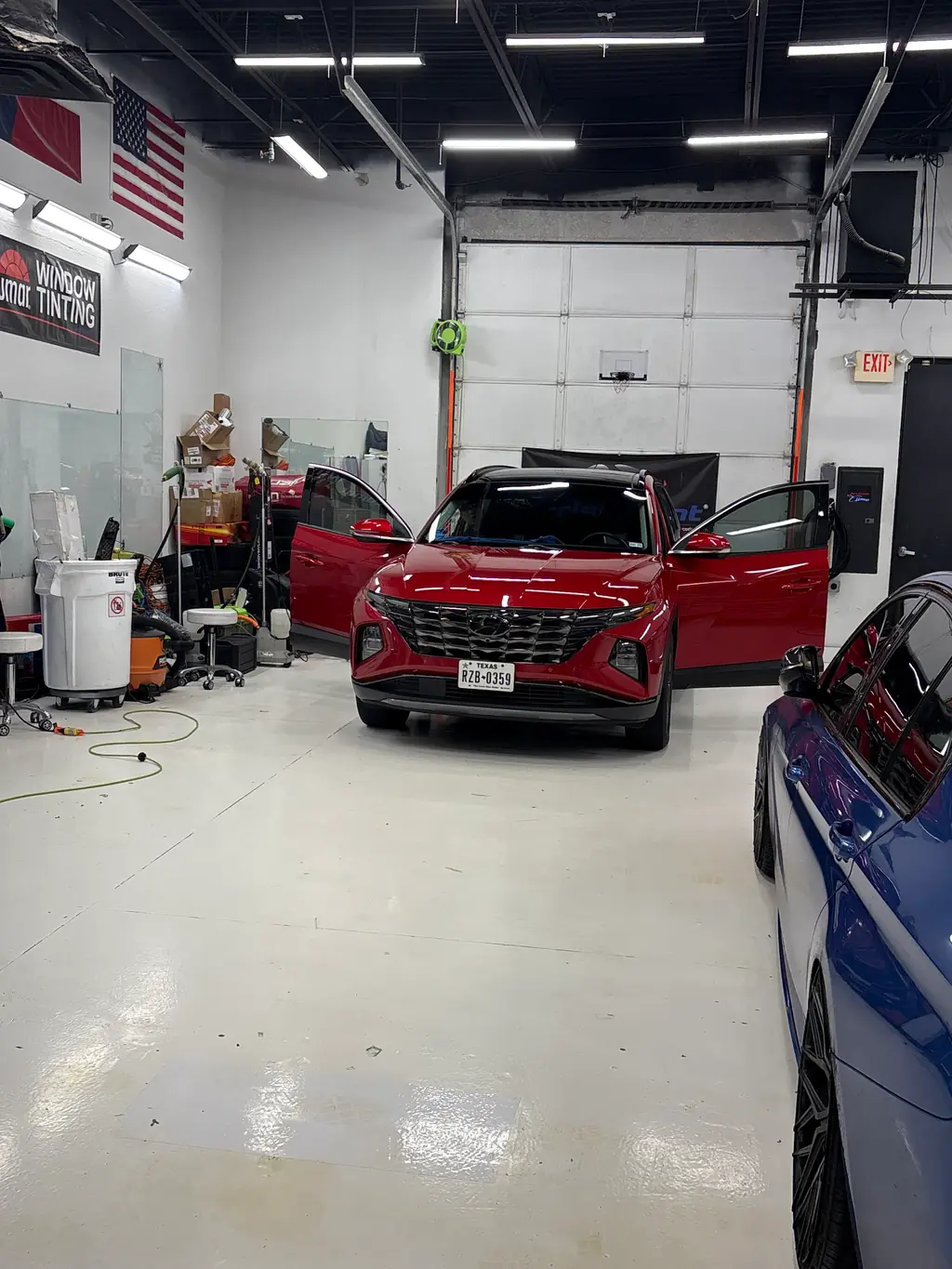
Window tint doesn't fail all at once. It starts small, a bubble near the edge, a slightly different tint on one corner, and it gets worse from there. By the time most people call us about removing old tint, it's usually been bothering them for a while already, and in a lot of cases it's gotten harder to deal with than it would have been six months earlier.
Why old tint turns purple
Dye-based film is the most common type to go purple over time. The dye that gives the film its color breaks down under years of UV exposure, and it doesn't fade evenly to clear, it shifts toward purple or brown first. That's a sign the film itself has chemically degraded, not just gotten dirty or scratched. Once you see that color shift, the adhesive underneath it is usually degrading too, and that's the part that actually makes removal harder.
Why the adhesive is the real problem
As film ages, especially in Texas heat, the adhesive bonding it to the glass breaks down. Sometimes that shows up as bubbling, where the film separates from the glass in visible pockets. Other times the adhesive gets brittle and starts to crumble rather than peel off in one piece. Brittle adhesive is genuinely worse to remove than fresh adhesive, because it doesn't come off clean. It fragments, sticks in patches, and takes more time and more scraping to fully clear off the glass.
That's exactly the kind of situation one of our customers described to us: dealership tint that had gotten dry and was becoming unsafe to strip on their own, before it got any worse. Waiting past that point doesn't make the tint safer to remove, it just makes the eventual removal job longer and more involved.
The defroster line risk
Rear windows on most vehicles have defroster lines embedded in the glass, and those lines are one of the more delicate parts of a removal job. Aggressive scraping, the kind that brittle, degraded adhesive tends to require, can damage or lift those lines right off the glass. A defroster line that gets damaged during a rushed or improper removal isn't something that fixes itself, it's a separate repair. That's one of the clearest reasons removal isn't really a do-it-yourself job once the film has been on for years, especially on the back window.
What a proper removal involves
A correct removal uses heat and the right tools to soften the adhesive evenly, so the film lifts off in as large a piece as possible rather than shredding. Whatever adhesive residue is left behind then has to be cleaned off the glass completely, not just scraped at, so the surface is actually ready for new film if you're having it retinted. Skipping that cleanup step is how you end up with new tint installed over old adhesive residue, which shows up later as uneven texture or bubbling in the new film, defeating the purpose of redoing it in the first place.
If your tint has started to shift color, bubble, or feel brittle at the edges, that's the signal to deal with it rather than wait it out. We remove old tint, whether it's ours, a dealership install, or from another shop, and if you want new film after, we can usually do that the same visit. Full installs typically run 2 to 4 hours depending on the vehicle, and removal adds to that depending on how far along the old film has degraded.
Frisco Tint — (972) 587-7234
Call (972) 587-7234More articles
Texas Window Tint Law: What 25% VLT Actually Means for Your Car
Texas sets a real minimum for how much light your front windows have to let through. Here's what that number means and why it doesn't have to cost you comfort.
Dyed, Metalized, Carbon, or Ceramic: Which Window Tint Film Is Right for You
Not all window tint is the same product wearing a different price tag. Here's what separates dyed, metalized, carbon and ceramic film, and how to pick the right one.